icon-globe
Search Connect with us

Monsoon Challenges and Disease Management in Poultry

Poultry monsoon disease management banner with chicken in rain – Vinayak Ingredients

In tropical monsoon regions, like India, seasonal changes are a major non-genetic factor influencing poultry production. The rainy season usually causes an increase in humidity and a drop in temperature. Rainfall impacts both the quality and amount of feed, while wind speed can affect disease outbreaks. The chicken industry often faces more difficulties due to disease outbreaks during the monsoon, as it creates ideal conditions for diseases to grow and spread among flocks. As a result, most poultry farmers see high rates of mortality and morbidity during this time.

Common poultry diseases during monsoon including mycotoxicosis, coccidiosis, respiratory issues, and gut diseases – Vinayak Ingredients

Best practices for managing poultry in monsoon: housing, litter, water, light, and feed management – Vinayak Ingredients

Product-Based Solutions for Specific Disease Conditions

  • Mycotoxicoses:

VINSORB-BIO is a unique combination of high-grade mycotoxin adsorbents and mould inhibitors, as well as antifungal elements, along with lipotropic agents, which makes VINSORB-BIO a very effective mycotoxin binder.

  • Coccidiosis:

BIOCOCCIN is a phytogenic coccidiostat that helps to control coccidiosis in poultry.

  • Gut-Related Diseases:

DIARRELIF is the mixture of appropriately selected herbs and their blends, which positively reduces diarrhoea in poultry.

  • Respiratory Diseases:

MUCOFORT is a natural tonic that ensures the rapid recovery of respiratory issues in poultry.

  • Immunosuppression:

NUCLEOVIN is a potential immunomodulator that contains nucleotides, vitamin C, and probiotics that can activate immune system responses.

*References on request*

Vegetable Powders for Nutraceuticals: Enhancing Modern Formulations

Vegetable Powders for Nutraceuticals: Enhancing Modern Formulations

The nutraceuticals market is leading the way in a plant revolution. As culture and wellness become mainstream, whole, nutrient-dense ingredients are more and more in demand. vegetable powders for nutraceuticals have emerged as a savvy, science-driven solution that provides concentrated nutrition in convenient formats.

Vegetables such as beetroot, spinach, carrot, kale, and tomato are fruits and vegetables in addition to being functional health enhancers. Upon spray drying, these vegetables become healthy nutritional ingredients for food health formulations. Sprouting from vascular health to immunity and antioxidant defense, every vegetable has a particular health benefit in powdered form.

What Are Spray Dried Vegetable Powders?

Spray drying is a process that transforms liquid vegetable purees or extracts into free-flowing stable powders in an instant low-heat drying process. It contributes to the preservation of the majority of the original nutrients of the vegetable and enhancing shelf life and usability. Spinach, beetroot, carrot, kale, and tomato are typical vegetables to be spray dried for the manufacture of high-performance vegetable powders for nutraceuticals and functional applications.

High-Impact Spray Dried Vegetable Powder for Nutraceutical Applications

Beets

Beetroot powder is rich in nitrates and iron. It is most suitable for pre-workout drink powders, energy effervescents, and circulation support tablets due to its ability to increase blood flow, endurance, and oxygen uptake.

Spinach

Iron, magnesium, and folate are all found plentifully in spinach powder. It fights fatigue, enhances immunity, and aids red blood cell formation. It is commonly used in immunity candies, daily greens blends, and iron supplements.

Carrot

Carrots are rich in Beta-carotene and vitamin A. It is an antioxidant and enhances eye and skin health. Carrot Powder can be blended into numerous applications like effervescent tablets, dietary supplements, and functional beverages.

Kale

Kale is rich enough in calcium, fibre, and vitamins C and K. Kale has anti-inflammatory, bone-building, and detoxing activities. Kale powder is frequently utilized in green smoothie blends, fibre supplements, and powdered detox beverages.

Tomato

Tomatoes have a lot of Vitamin C and lycopene. It is best to use in cardiovascular blends, men’s supplements, and antioxidant fizzes due to its heart-friendly and antioxidant nature. Tomato powder includes antioxidant characteristics that make it an ideal supplement for skin supplements.

How Spray Dried Vegetable Powders Improve Formulations

They dissolve readily and provide natural nutrients with colour and flavour appeal in premix or ready-to-mix beverages. They add some benefits to in the functional segments. Capsules, sachets, gummies, or chewables offer convenient formulation and neat nutrition. Such spray-dried powders for gummies are particularly beneficial for the formulation of plant-based products that appeal to health-conscious consumers.

In growing demand for vegetable powders in nutraceuticals, gummies continue to grow in popularity because of their appealing shape and ease of use. Spray-dried powders for gummy applications offer better masking of flavors, homogenous texture, and shelf life, yet offer required nutrients in an acceptable state.

Wrapping Up: The Benefits of Spray Dried Vegetable Powder

Whole vegetable dietetic benefits are now in convenient, stable, and flexible forms with spray-dried vegetable powders. Vegetable powders for nutraceuticals offer manufacturers and formulators the perfect platform for developing more intelligent, plant-based, and natural ingredients. Flexible in uses for products such as RTM beverages, effervescents, or new-generation gummies, the utilization of vegetable powders for nutraceuticals ensures functional nutrition that can be trusted by consumers.

Do you wish to boost your vegetable strength in nutraceutical products?

Get in touch with us to learn about our extensive line of products of spray-dried powder and functional formulations that are specifically tailored for foods, drinks, and supplements.

Avian Influenza in Poultry: What Every Farmer Needs to Know

Sick poultry showing signs of Avian Influenza infection with health monitoring tools

Avian influenza, or bird flu, is a zoonotic disease caused by influenza A viruses of the Orthomyxoviridae family, classified by two surface proteins: haemagglutinin (H1–H16) and neuraminidase (N1–N9). These viruses vary in severity; low-pathogenic strains cause mild respiratory issues or reduced egg production, while highly pathogenic strains (HPAI) can lead to severe, often fatal, systemic disease. As per the recent FAO report, there have been 297 reported HPAI outbreaks in animals across five regions, mainly due to H5N1 (254 cases), followed by H5Nx (33), H5N5 (9), and H5N9 (1).

Understanding Transmission

Wild aquatic and migratory birds serve as asymptomatic reservoirs of the Avian Influenza virus. These birds transmit the virus to domestic poultry via contaminated environments, where viral shedding occurs through feces, saliva, and respiratory secretions. They can be further spread through direct contact with secretions from infected poultry, contaminated feed, water, and farm equipment. This results in severe economic and production losses for the farmer. The avian influenza virus has a high survival rate even in low temperatures and harsh environments.

Know the signs of Avian Influenza in your flock          

Poultry birds showing early signs of Avian Influenza like ruffled feathers, respiratory distress, and reduced egg production

Diagnosis methods to determine Avian influenza

Avian Influenza cannot be diagnosed on the basis of clinical signs alone; laboratory testing is also important.

  • Molecular techniques like reverse-transcription PCR (RT-PCR), which detect the viral RNA.
  • Serological tests such as AGID or ELISA, used to identify antibodies against the virus.
  • Genetic sequencing  which helps confirm the virus strain and its pathogenicity.

These tests help distinguish Avian Influenza from other poultry diseases such as Newcastle disease, infectious bronchitis, or mycoplasmosis.

Controlling the Spread

Avian Influenza control strategies are designed to prevent, manage, or completely eradicate the infection from the farm. The following key measures may play a vital role in effective disease control of Avian influenza-

Biosecurity (Exclusion and Inclusion):

Implementing strict measures to prevent contact between infected or wild birds and healthy poultry via proper fencing, limiting access to poultry farms, and ensuring hygiene practices for visitors and farm surfaces, equipment, and facilities to eliminate potential virus contamination.

Diagnostics and Surveillance:

Regular monitoring of poultry flocks for signs of illness, including testing for the avian influenza virus through sampling and laboratory analysis.

Elimination of AVIAN INFLUENZA Virus-Infected Poultry:

Humanely eliminating infected poultry and safely disposing of carcasses and contaminated materials to prevent further spread of the virus and environmental contamination.

Decreasing Host Susceptibility to the Virus (Vaccines and Host Genetics):

Developing and administering safe and effective vaccines and improving host resistance to the virus through selective breeding programs to protect poultry flocks from infection.

Education of all Personnel on Infectious Diseases and their Control:

Providing comprehensive training to poultry farmers, veterinarians, and other stakeholders involved in poultry production on proper biosecurity practices, disease recognition, and reporting procedures.

*References on request*

Carmine Natural Color: A Versatile Red for Food and Beverages

Carmine Natural Color: A Versatile Red for Food and Beverages

In today’s continuously changing landscape of food and beauty colorants, Carmine Natural Color is a time-trusted, top-of-the-line formulation for product manufacturers in need of a natural red food colour. Renowned for its good pigmentation, superior formulation stability, and extensive applications across industries, Carmine is still one of the go-to choices of product developers around the world. As the world continues to rise in demand for natural food coloring formulations.A Natural Red from Cochineal Insects.

Carmine is obtained from the cochineal insect (Dactylopius coccus), which is widely distributed in Central and South America. The insects live on cacti and secrete a red-colored pigment known as carminic acid, which is collected and purified for commercial purposes. This pigment is traditionally used in food coloring as well as in coloring textiles for centuries.

After processing, Carmine Natural Color (E120) is present in powder and liquid forms. It is used extensively by regulatory agencies in the food and cosmetic markets and is known as one of the most stable and efficient natural red dyes on the market.

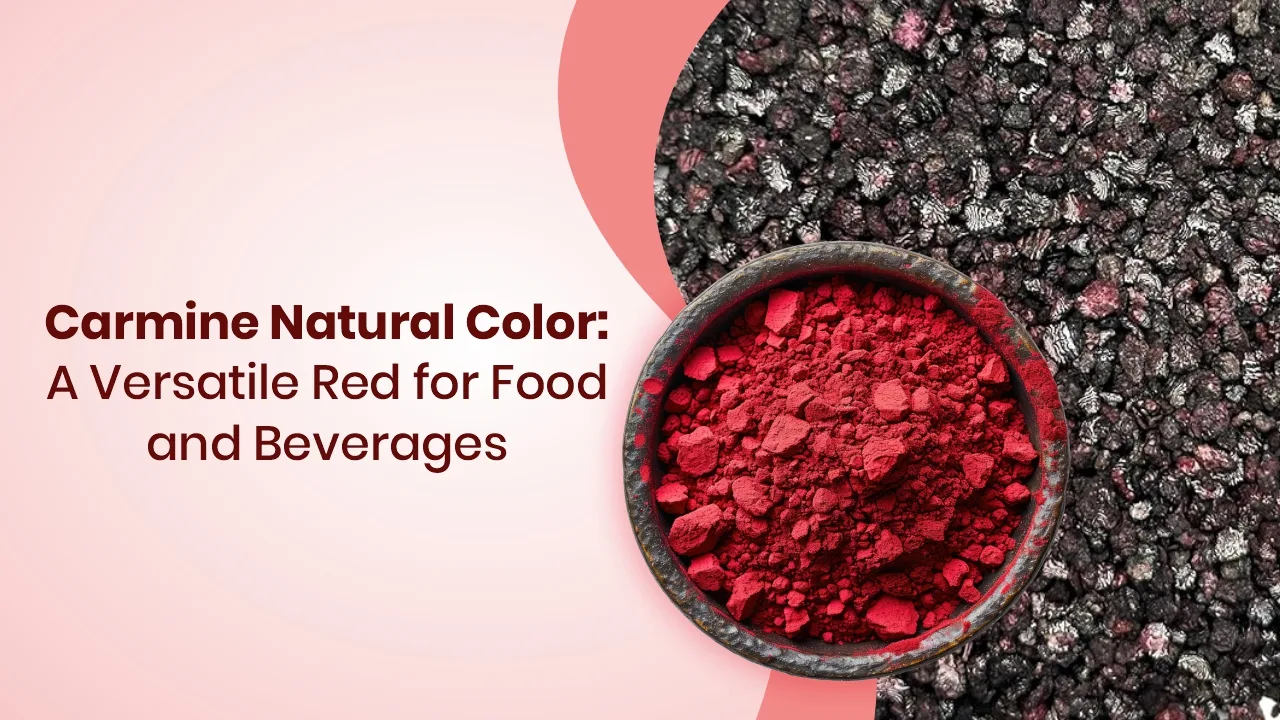
Cochineal-derived Carmine Natural Color powder for U.S. food and beverage industry

A Versatile Shade Scale: From Pink to Deep Red

Carmine has a wide choice of red shades, ranging from pale pinks to strong crimson colors. Final color effect is determined by a number of factors such as product formulation, dosage, and processing conditions. In low pH applications, the pigment is inclined towards lighter pink-red shades, whereas in neutral or higher pH systems, it creates deeper and stronger reds.

This versatility renders Carmine a versatile natural colorant for various sets of visual effects in foods, drinks, and cosmetics.

Stability Across pH and Processing Conditions

One of the key strengths of Carmine Natural Color is its heat stability and pH variability. It can last in a pH of about 3 to 8, which means that it can be used with acidic foods as well as neutral matrices. Carmine is also resistant to frequent heat processes such as baking, boiling, and pasteurization so that the color is retained over product shelf life.

This strong stability renders Carmine suitable for processed foods and drinks that call for long-lasting, consistent coloration.

Applications of Carmine in Food, Beverages & Cosmetics

Carmine is applied in a broad range of applications such as:

  • Dairy products: flavored yogurts, milkshakes, ice creams

  • Bakery products: cakes, icings, fillings

  • Confectionery: hard candies, gummies, marshmallows

  • Beverages: syrups, cordials, juices

  • Nutraceuticals: chewable tablets, protein gummies

  • Cosmetics: lipsticks, blushes, eye makeup

Its high color strength and natural source make it a superior substitute for artificial red dyes like Erythrosine which was recently banned by the USFDA in food and can also  be  used in personal care applications.

Vinayak’s Know-How in Carmine Natural Color

At Vinayak Ingredients, we are experts in offering top-quality, application-specific Carmine Natural Color solutions. Our Carmine is available both in powder and liquid forms and is specially designed to perform well across various product categories. If you’re developing for dairy, bakery, beverages, or nutraceuticals, Vinayak guarantees color performance that’s vibrant, stable, and compliant.

Our R&D assistance and customer-specific tailoring establish us as a reliable business partner for companies wanting to enhance product attractiveness with natural food coloring. Our global regulatory compliance and traceability in the supply chain are also top priorities for all of our natural color products.

Need a Dependable Natural Red Food Colour?

Collaborate with Vinayak Ingredients for high-quality Carmine Natural Color solutions that provide stunning visuals, long-term stability, and consistent performance.

Aquaculture plays a crucial role in meeting the global demand for protein. However, the sustainability and productivity of this sector

Eco-friendly Argulus treatment in aquaculture using natural solutions by Vinayak Ingredients

Aquaculture plays a crucial role in meeting the global demand for protein. However, the sustainability and productivity of this sector are constantly threatened by parasitic infections. Among them, Argulus, commonly known as fish lice, is one of the most problematic ectoparasites affecting freshwater and ornamental fish worldwide. Argulus is a genus of crustacean parasites that attach to the skin, fins, and gills of fish, feeding on their blood and tissue fluids, causing Argulosis. In countries with intensive aquaculture practices, such as India, Bangladesh, and China, outbreaks of Argulus have been reported as one of the top reasons for reduced fish yields, particularly in carp culture.

Current Control Strategies:

Chemical Control

A series of chemicals with a problematic toxicity profile are well known in aquaculture, as they suffer from ectoparasitic infections. Organophosphates (e.g., trichlorfon, malathion, dichlorvos), lufenuron, emamectin benzoate, deltamethrin, sodium permanganate, formalin, diflubenzuron, etc., are commonly used chemicals for the control of Argulus infestation in fishes.

Mechanical Control

In addition to chemicals, physical methods such as shaking infested fish in nets to mechanically detach lice, along with egg removal through drying or substrate manipulation (e.g., bamboo-egg boards), help to reduce infestation pressure.

Biological Control

Biological control strategies utilize natural predator–prey relationships to manage ectoparasites like Argulus. In tropical aquaculture, fish such as Gambusia have been noted to feed on free-swimming Argulus larvae, while other small fish actively remove parasites from the skin of larger hosts.

Limitations of Current Control Strategies:

  1. Synthetic chemicals have been used to control this ectoparasite. However, they will have an impact on physiological changes, fish growth, and the balance of aquatic ecosystems because they can leave residues that can enter environmental components. The active ingredients are very difficult to decompose in nature, and resistance can occur in target parasites. In addition, it can cause residue accumulation in the body of the fish.
  2. Mechanical approaches are labor-intensive and not always sustainable.
  3. Though biological control methods are eco-friendly and reduce the reliance on chemicals, they come with several limitations. One major challenge is the seasonal effectiveness of cleaner species—fish like wrasse are less active during colder months, reducing their efficiency in parasite removal.

These limitations highlight the growing interest in exploring eco-friendly, sustainable, and effective natural alternatives to control this parasite.

Plant-Based Alternative to Control Argulosis:

Alternatives for controlling argulosis in fish farming can use medicinal ingredients derived from herbal plants. Pharmacologically, these herbs have therapeutic effects as antibacterials, antiparasitics, and immunostimulants. Numerous applications of medicinal plants as alternative medicine for treating Argulosis in fish have been carried out. The ability of plants to control this disease is due to the presence of natural products in the form of chemical compounds in organic form, so they are safe to use and do not pose a risk that is harmful to fish, to humans who consume them or to the environment and do not cause resistance to parasites.

Dehook is a natural solution for relieving Argulus infestation in aquatic animals, offering a safe and eco-friendly alternative to chemical treatments. Know more about Dehook at Vinayak Ingredients (India) Private Limited.

*References on request*

Fat Powders for RTM Beverages: Enhance Creaminess in Premix Lattes, Milkshakes & Frappes

Fat Powders for RTM Beverages: Enhance Creaminess in Premix Lattes, Milkshakes & Frappes

Ready-to-mix (RTM) drinks have revolutionized the way people consume their go-to café-style treats. From cold lattes and frappes to thick milkshakes and protein drinks, the types of beverages that consumers can enjoy with ease and convenience are endless. At the hub of this extravagance is a subtle yet integral ingredient that maximizes both flavor and texture: fat powders.

As a trusted fat powder supplier for beverage premixes, Vinayak Ingredients ensures consistent quality and performance for your RTM applications.

Fat powders are dry-form ingredients that introduce the richness and smoothness of fats into powdered beverage premixes, yet with enhanced stability and convenience over traditional oils or dairy creamers. They assist in providing the mouthfeel and body that make reconstituted beverages feel truly rewarding.

Vinayak Ingredients fat powders for RTM beverages in USA.

Why Fat Powdersin Premix Beverages

Some of the main challenges in creating RTM drinks are delivering a creamy, balanced mouthfeel without requiring refrigeration or fresh dairy. Fat powders bridge this divide. They add a smooth, silky texture to beverages once reconstituted with water or milk, enhancing drinkability and backing up flavor intensity.

Whether it’s the velvety texture of an ice-cold latte, the rich body of a milkshake premix, or the well-balanced creaminess of a powdered protein drink, fat powders play a vital role in completing the beverage experience.

Fat Powders We Provide: Plant-Based Creaminess, Naturally

At Vinayak Ingredients, a reliable fat powder supplier for beverages, we offer a diverse portfolio of plant-based fat powders specifically formulated to meet the various needs of RTM beverage systems. Our range includes:

●  Sunflower Fat Powder contains a clean, neutral taste that enhances beverages without dominating them. It’s perfect for coffee premixes and flavored lattes where subtlety and texture are key.

●  Groundnut Fat Powder contributes a nutty warmth and rich mouthfeel. It blends seamlessly into chocolate, malt, or caramel-flavored mixes, offering depth and indulgence.

●  Coconut Fat Powder provides a soft sweetness and silky finish, ideal for tropical-themed premix drinks, vegan milkshakes, and exotic frappes.

●  MCT Fat Powder offers a light, rounded creaminess with a neutral flavor and is well-suited for functional mixes like keto-friendly RTM coffees or performance nutrition shakers.

●  HOSO (High Oleic Sunflower Oil) Fat Powder provides a neutral flavor with light smoothness, ideal for clean-label premix beverages requiring high oxidative stability.

●  Soybean Fat Powder delivers balanced creaminess with a hint of natural bean-like flavor, making it ideal for plant-protein premixes, soy lattes, and dairy alternatives.

Promoting Stability and Shelf Life in Powdered Beverages

Beyond flavor and texture, fat powders provide functional benefits that support large-scale manufacturing of powdered drink premixes. Their dry state contributes to a longer shelf life, making them ideal for mass distribution and ambient storage.

They dissolve easily upon mixing and remain stable in various reconstitution conditions, ensuring the final beverage looks visually appealing and retains its creaminess over time.

These powders offer formulation versatility, succeeding in dairy-based mixes, plant-based systems, and functional beverage blends. Whether the goal is indulgence, health, or a combination of both, fat powders adapt seamlessly to different premix formats.

As a specialized fat powder supplier for beverages, we help brands meet texture and stability goals with tailor-made fat powder solutions that support ease of reconstitution and sensory excellence.

Making a Lasting Beverage Experience

Today’s consumers expect more than just taste from their drink mixes—they seek texture, consistency, and that unmistakable creamy sensation that mimics fresh-made beverages. Fat powders enhance the experience in an understated yet powerful way. They smoothen flavor edges, round off taste profiles, and elevate the overall quality perception.

Each sip of a reconstituted frappe or the silky mouthfeel of a protein latte owes much of its appeal to the thoughtful use of premium fat powders. Though subtle in presence, their impact is clearly felt in every sip.

In Conclusion

In the evolving world of ready-to-mix beverages, creating consistently indulgent, stable, and easy-to-use products is key. With sunflower, groundnut, coconut, MCT, and other plant-derived fat powders, beverage formulators can craft mixes that deliver on richness, convenience, and sensory appeal, without compromise.

From instant lattes and powdered frappes to thick milkshake blends and fitness shakes, fat powders offer a custom approach to creating creamy, craveable drinks with shelf stability and ease of preparation.

Vinayak Ingredients is your trusted fat powder supplier for beverages, offering innovative, plant-based fat powder solutions designed to elevate the quality of every premix product.

Zearalenone and T2 mycotoxins – Hidden threats in livestock production

Livestock feed safety with natural mycotoxin binders for Zearalenone and T2 toxin control by Vinayak Ingredients

Mycotoxins are secondary metabolites produced by strains of specific fungal species under suitable atmospheric conditions. Mycotoxins can contaminate feed during cultivation, storage, and transport, causing an impact on livestock that consume infected feed. Different mycotoxins are produced by the same fungal species that may have additive, synergistic, or antagonistic effects with other toxins and infectious agents. This reduces the productivity of animals and impacts the farm profits. Furthermore, certain mycotoxins can be transferred through animal-derived food products, posing a risk to human health.

Illustration of mycotoxin impact on livestock health caused by Zearalenone and T2 toxins in animal feed

According to the World Mycotoxin Survey, mycotoxin threats in livestock feed are a global concern. In the edition for January–December 2024, multiple mycotoxins were detected, with more economic impact than in the previous year. Notably, the global prevalence of T2 has increased from approximately 22% to 23%, while that of zearalenone has increased from 52% to 60%, leading to economic losses to farmers. Both ZEN and T-2 are highly stable compounds, capable of resisting heat, storage conditions, and standard feed processing techniques. Their ability to survive harsh environmental and industrial conditions makes them particularly dangerous, as they remain active in feed and continue to exert toxic effects on animals and eventually humans.

Zearalenone

Zearalenone is one of the critical toxins produced by Fusarium fungal species, mainly present in cereal grain-derived products. Zearalenone resembles estrogen and its derivatives and might interfere with estrogen receptors. This leads to decreased fertility, litter size, changes in serum progesterone levels in females, decreased spermatogenesis, libido, testosterone levels, and testicular weight in males. Zearalenone impacts conception, ovulation, implantation, the development of the fetus, and the viability of newborn animals at higher doses.

T-2 toxins

T-2 is from the trichothecene class of mycotoxins, and its toxicity depends on age, dosage, and species. The T-2 toxin produced by Fusarium tricinctum has been linked to a toxicosis in animals fed moldy feed. T-2 toxin inhibits protein and DNA synthesis and weakens immune responses. It mainly targets rapidly dividing cells in the immune system and gastrointestinal tract. Clinical symptoms include feed refusal, weight loss, growth retardation, diarrhea, intestinal hemorrhages, oral lesions, vomiting, and, in severe cases, death.

Management of zearalenone and T2 toxin

Zearalenone and T2 toxin are stable thermally and chemically, making it difficult to eliminate them from feed by using common mycotoxin management techniques, such as heating, fermentation, or irradiation. Other traditional methods, such as chemical degradation or physical separation, might lead to nutrient degradation, palatability issues, and feed safety. To overcome these challenges, mycotoxin binders are widely used in animal nutrition as a practical, safe, and economical solution.

A mycotoxin binder for animal feed is a substance that is used in small quantities to entrap mycotoxins in the gastrointestinal tract. They help to prevent the toxin from entering the animal’s bloodstream via the gut, preventing further damage to animal health. Mycotoxin binders can be inorganic or organic. Inorganic binders, like clays and activated carbon, primarily bind mycotoxins through electrostatic and van der Waals forces, while organic binders, such as yeast cell walls and cellulose, often utilize more specific binding mechanisms, like hydrogen bonding. 

These binders trap harmful toxins without affecting feed nutritive value and animal health. Mycotoxin binders for animal feed are a cost-effective solution to minimize economic damage and improve livestock productivity.


*References on request*

Versatile Modified Starch Applications for Snacks, Bakery & Desserts

Versatile Modified Starch Applications for Snacks, Bakery & Desserts

In the world of food manufacturing, ingredient functionality often determines the success of a product, particularly in terms of delivering the desired texture, appearance, and consistency. One ingredient that quietly works behind the scenes in many of these roles is modified starch.
 From helping snacks stay crispy to providing a glossy finish on baked goods and stabilizing creamy desserts, modified starch applications are incredibly diverse. At Vinayak Ingredients, we specialize in developing starch solutions that improve both product performance and process efficiency. In this blog, we’ll break down how modified starch for crispy snacks in food manufacturing, bakery products, and dessert emulsification can elevate your formulations and why it’s a smart choice for food product developers.

Modified Starch Applications: A Multi-Purpose Ingredient

Modified starch applications span a wide range of functions, including thickening, binding, emulsifying, film-forming, and moisture control. These starches are chemically, physically, or enzymatically treated to improve their performance under processing conditions, such as high heat, shear, or low pH, where native starches often fail.
 From snacks to baked goods and desserts, modified starch for crispy snacks in food manufacturing and bakery products deliver critical functional benefits that enhance quality and production efficiency.

Modified Starch for Crispy Snacks in Food Manufacturing: Crunch That Lasts

Achieving the perfect crisp in snacks requires more than just frying or baking; it demands ingredients that can retain structure and resist moisture. Modified starch for crispy snacks in food manufacturing provides superior expansion, crunch, and texture stability in fried, extruded, and coated products.
 In snack formulations such as potato chips, multigrain crisps, or coated varieties, modified starch enhances expansion, texture control, and structural integrity during processing. Their moisture barrier properties help prevent sogginess by reducing water absorption, ensuring the snack stays crispy and appealing throughout its shelf life.

Modified Starch in Bakery Products: Glazing, Texture & Moisture Control

Bakery formulations demand precise control over texture, structure, and visual appeal, from soft, uniform crumbs to glossy, attractive finishes. Modified starch in bakery products offers multiple functional benefits, making it a valuable tool for formulators.
 These starches play a key role in:

● Enhancing dough strength, elasticity, and processability

● Providing a consistent crumb structure in cakes, muffins, and cupcakes

● Functioning as glazing agents to deliver a shiny, premium finish on pastries and confections.

In products like puff pastries, cakes, and breads, modified starch in bakery products also helps regulate moisture migration, delay staling, and extend shelf life, essential for meeting consumer expectations and maintaining quality in fast-moving bakery environments.

Emulsifying Agents for Desserts: Smoother Mouthfeel, Better Stability

In creamy desserts, fat dispersion and texture play a vital role in consumer acceptance. This is where emulsifying agents for desserts, especially modified starches, shine. They help create stable emulsions in products like puddings, mousses, whipped toppings, and non-dairy creams.
 By using starch-based emulsifiers, food formulators can achieve smooth, consistent textures and improved control over syneresis (water separation), resulting in longer shelf life and more visually appealing finished products.

Why Vinayak Ingredients?

At Vinayak Ingredients, we offer a tailored range of modified starches engineered for optimal performance across diverse food applications, whether you’re looking for modified starch for crispy snacks in food manufacturing, modified starch in bakery products, or dessert emulsification.
 Our starches are developed with application-specific functionality in mind. They are designed to withstand various processing conditions, such as heat, pH fluctuations, and mechanical shear, ensuring consistent quality and reliable performance in every batch.
 What sets us apart is not just our product quality, but also our technical support. Our team collaborates closely with food technologists and formulators to optimize recipes, enhance processing efficiency, and reduce overall production costs.

Key Takeaways

Modified starches are the unsung heroes behind many successful food innovations. They deliver crispiness in snacks, contribute to a glossy finish in baked goods, and enhance the creaminess and stability of desserts. Their adaptability makes them essential across a wide range of processed food categories.

With proven expertise in modified starch applications and a commitment to innovation, Vinayak Ingredients is your trusted partner in creating high-performance, cost-effective, and consumer-friendly food formulations.

Ready to upgrade your formulation?

Connect with our technical experts to find the right modified starch for your specific product needs.